
The difference between CE, ECE and DOT motorcycle gear certifications is their scope: CE (Regulation (EU) 2016/425) covers apparel, gloves and armor sold in the EU; ECE (R22.05/R22.06) is the global standard for helmets; DOT (FMVSS 218) is the US legal minimum for helmets. CE apparel requires third-party lab testing (EN 17092, EN 1621, EN 13594), ECE requires batch factory testing, and DOT relies on manufacturer self-certification with random NHTSA compliance checks. For distributors in Southeast Asia and Latin America, sourcing CE-certified apparel and ECE-rated helmets is the safest strategy, since CE generally exceeds local requirements.
## Understanding the CE Standard: The Gold Standard for Apparel and ArmorThe CE (Conformité Européenne) mark is mandatory for all Personal Protective Equipment (PPE) sold within the European Economic Area. Since April 2018, motorcycle clothing has been classified as PPE under **Regulation (EU) 2016/425**.Unlike other standards that might focus only on helmets, CE covers the entire outfit. As a B2B buyer, you should be familiar with these specific sub-standards:* **EN 17092-1 to 6:** This is the primary standard for protective garments (jackets and trousers). It categorizes gear into classes: Class AAA (highest protection), Class AA, Class A, Class B (abrasion protection only), and Class C (impact protection only). * **EN 1621-1 & EN 1621-2:** These govern impact protectors for limbs and back, respectively. You will typically see “Level 1” (standard protection) or “Level 2” (higher impact absorption) on these protectors. * **EN 13594:** The essential standard for motorcycle gloves, testing for tear strength, seam strength, and abrasion resistance.For importers, sourcing CE-approved gear is a mark of quality. At MOTORCM, we focus on providing high-quality [motorcycle OEM/ODM](https://motorgearspro.com/motorcycle-oem-odm/) services that adhere to these rigorous European testing protocols, ensuring your brand stands for safety.## ECE and DOT: Decoding Helmet CertificationsWhile CE covers apparel, ECE and DOT are the titans of the helmet world. Understanding their differences is vital for any **motorcycle gear certification wholesale** strategy.### ECE (Economic Commission for Europe) The ECE R22.05 and the newer, more stringent **ECE R22.06** are widely considered the most advanced helmet standards globally. Used by over 50 countries, ECE 22.06 involves testing for impact at multiple speeds, rotational acceleration, and accessory testing (like visors and intercoms). It requires batch testing at the factory level, meaning a third-party laboratory verifies the quality throughout the production run.### DOT (Department of Transportation) The DOT standard, officially known as **FMVSS 218**, is the legal requirement for helmets sold in the United States. The key difference here is the “Self-Certification” model. Manufacturers test their own helmets to ensure they meet DOT requirements and then apply the sticker. The National Highway Traffic Safety Administration (NHTSA) performs random “compliance testing” later. While rigorous, the lack of mandatory pre-market third-party testing makes it distinct from the ECE model.## Comparison Table: CE vs ECE vs DOT at a GlanceFor a quick reference during your next procurement meeting, here is a comparison of the three major certification systems:| Feature | CE (PPE Regulation) | ECE (R22.06) | DOT (FMVSS 218) | | :— | :— | :— | :— | | **Primary Region** | European Union / Global | Europe / SE Asia / Latin America | United States / Canada | | **Product Scope** | Jackets, Pants, Gloves, Armor | Helmets | Helmets | | **Testing Model** | Mandatory 3rd Party Lab | Mandatory 3rd Party Lab | Self-Certification by Manufacturer | | **Testing Focus** | Abrasion, Tearing, Impact | Multi-angle impact, Rotation | Impact attenuation, Penetration | | **Market Status** | Essential for EU import | Global gold standard | Legal minimum for USA |## How B2B Buyers Can Verify Certificate AuthenticityIn the B2B sector, “trust but verify” is the rule. To avoid “fake” certifications, follow these steps when evaluating a new supplier:1. **Request the Full Test Report:** A simple image of a CE label is not enough. Ask for the official test report from a recognized laboratory (like SATRA, Ricotest, or IDIADA). 2. **Check the Notified Body Number:** For CE gear, the label should include a four-digit number next to the CE mark. You can look up this number on the European Commission’s NANDO database to ensure the lab is authorized to certify motorcycle PPE. 3. **Cross-Reference the Model Name:** Ensure the product name on the test report matches the product you are purchasing. 4. **Verify the Declaration of Conformity (DoC):** Manufacturers are legally required to provide a DoC for all CE-marked products.## Market Strategy: SE Asia and Latin AmericaFor distributors in Southeast Asia and Latin America, the choice between ECE and DOT is often a matter of local legislation and consumer perception. In many parts of Southeast Asia, ECE R22.05/06 is rapidly becoming the preferred standard due to its high testing frequency. In Latin America, while DOT is widely accepted, high-end distributors are increasingly demanding ECE or CE-certified apparel to differentiate themselves from “budget” non-certified competitors.Sourcing from a factory that understands these regional variations—like MOTORCM in Foshan, China—allows you to customize your order to meet specific local requirements without high MOQ barriers.## FAQ: Common Questions About Motorcycle Gear Standards**Q1: Can a jacket be both DOT and CE certified?** No. DOT is strictly a helmet standard in the USA. Apparel is not “DOT certified.” If a supplier claims their jacket is DOT certified, it is a red flag. Apparel should be CE certified.**Q2: What is the main difference between Level 1 and Level 2 protectors?** Level 2 protectors absorb more energy during an impact, resulting in less force being transmitted to the rider’s body. They are usually thicker and heavier but offer superior protection compared to Level 1.**Q3: Is ECE R22.06 backward compatible with R22.05?** Yes, for now. Most markets allow the sale of existing R22.05 stock, but manufacturers are transitioning all new production to R22.06 to meet the tougher testing requirements.**Q4: Does “CE Approved” mean the same as “CE Certified”?** Not necessarily. “CE Certified” implies the whole garment has passed testing, while some brands use “CE Approved” to refer only to the impact armor inside a non-certified jacket. Always clarify the scope of the certification.## Conclusion: Partnering for Compliance and GrowthNavigating the landscape of **CE vs ECE vs DOT certification** is the difference between a successful, long-term brand and a business plagued by returns and legal hurdles. By prioritizing certified gear, you protect your customers and your bottom line.At MOTORCM (Foshan Cangmang Technology Co., Ltd.), we specialize in high-quality motorcycle lighting and protective gear. Our factory offers flexible OEM and ODM solutions with low MOQs, ensuring that small and medium-sized distributors can access compliant, professional-grade gear. Ready to upgrade your inventory? [Contact us to get-quote](https://motorgearspro.com/get-quote/) and let’s build a safer riding experience together.“`json { “@context”: “https://schema.org”, “@type”: “FAQPage”, “mainEntity”: [ { “@type”: “Question”, “name”: “Can a jacket be both DOT and CE certified?”, “acceptedAnswer”: { “@type”: “Answer”, “text”: “No. DOT is strictly a helmet standard in the USA. Apparel is not ‘DOT certified.’ If a supplier claims their jacket is DOT certified, it is a red flag. Apparel should be CE certified.” } }, { “@type”: “Question”, “name”: “What is the main difference between Level 1 and Level 2 protectors?”, “acceptedAnswer”: { “@type”: “Answer”, “text”: “Level 2 protectors absorb more energy during an impact, resulting in less force being transmitted to the rider’s body. They are usually thicker and heavier but offer superior protection compared to Level 1.” } }, { “@type”: “Question”, “name”: “Is ECE R22.06 backward compatible with R22.05?”, “acceptedAnswer”: { “@type”: “Answer”, “text”: “Yes, for now. Most markets allow the sale of existing R22.05 stock, but manufacturers are transitioning all new production to R22.06 to meet the tougher testing requirements.” } }, { “@type”: “Question”, “name”: “Does ‘CE Approved’ mean the same as ‘CE Certified’?”, “acceptedAnswer”: { “@type”: “Answer”, “text”: “Not necessarily. ‘CE Certified’ implies the whole garment has passed testing, while some brands use ‘CE Approved’ to refer only to the impact armor inside a non-certified jacket. Always clarify the scope of the certification.” } } ] } “`Introduction: Why Certification is the First Gate in Wholesale Procurement
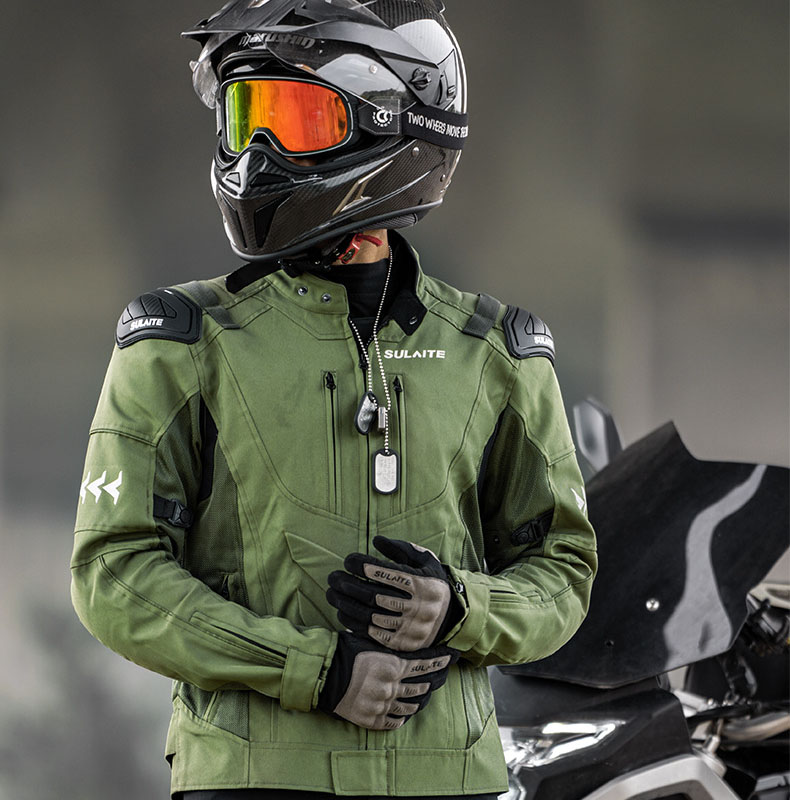
The difference between CE, ECE and DOT motorcycle gear certifications is their scope: CE (Regulation (EU) 2016/425) covers apparel, gloves and armor sold in the EU; ECE (R22.05/R22.06) is the global standard for helmets; DOT (FMVSS 218) is the US legal minimum for helmets. CE apparel requires third-party lab testing (EN 17092, EN 1621, EN 13594), ECE requires batch factory testing, and DOT relies on manufacturer self-certification with random NHTSA compliance checks. For distributors in Southeast Asia and Latin America, sourcing CE-certified apparel and ECE-rated helmets is the safest strategy, since CE generally exceeds local requirements.
Understanding the CE Standard: The Gold Standard for Apparel and Armor
The CE (Conformité Européenne) mark is mandatory for all Personal Protective Equipment (PPE) sold within the European Economic Area. Since April 2018, motorcycle clothing has been classified as PPE under Regulation (EU) 2016/425.
Unlike other standards that might focus only on helmets, CE covers the entire outfit. As a B2B buyer, you should be familiar with these specific sub-standards:
- EN 17092-1 to 6: This is the primary standard for protective garments (jackets and trousers). It categorizes gear into classes: Class AAA (highest protection), Class AA, Class A, Class B (abrasion protection only), and Class C (impact protection only).
- EN 1621-1 & EN 1621-2: These govern impact protectors for limbs and back, respectively. You will typically see “Level 1” (standard protection) or “Level 2” (higher impact absorption) on these protectors.
- EN 13594: The essential standard for motorcycle gloves, testing for tear strength, seam strength, and abrasion resistance.
For importers, sourcing CE-approved gear is a mark of quality. At MOTORCM, we focus on providing high-quality motorcycle OEM/ODM services that adhere to these rigorous European testing protocols, ensuring your brand stands for safety.
ECE and DOT: Decoding Helmet Certifications
While CE covers apparel, ECE and DOT are the titans of the helmet world. Understanding their differences is vital for any motorcycle gear certification wholesale strategy.
ECE (Economic Commission for Europe)
The ECE R22.05 and the newer, more stringent ECE R22.06 are widely considered the most advanced helmet standards globally. Used by over 50 countries, ECE 22.06 involves testing for impact at multiple speeds, rotational acceleration, and accessory testing (like visors and intercoms). It requires batch testing at the factory level, meaning a third-party laboratory verifies the quality throughout the production run.
DOT (Department of Transportation)
The DOT standard, officially known as FMVSS 218, is the legal requirement for helmets sold in the United States. The key difference here is the “Self-Certification” model. Manufacturers test their own helmets to ensure they meet DOT requirements and then apply the sticker. The National Highway Traffic Safety Administration (NHTSA) performs random “compliance testing” later. While rigorous, the lack of mandatory pre-market third-party testing makes it distinct from the ECE model.
Comparison Table: CE vs ECE vs DOT at a Glance
For a quick reference during your next procurement meeting, here is a comparison of the three major certification systems:
| Feature | CE (PPE Regulation) | ECE (R22.06) | DOT (FMVSS 218) |
|---|---|---|---|
| Primary Region | European Union / Global | Europe / SE Asia / Latin America | United States / Canada |
| Product Scope | Jackets, Pants, Gloves, Armor | Helmets | Helmets |
| Testing Model | Mandatory 3rd Party Lab | Mandatory 3rd Party Lab | Self-Certification by Manufacturer |
| Testing Focus | Abrasion, Tearing, Impact | Multi-angle impact, Rotation | Impact attenuation, Penetration |
| Market Status | Essential for EU import | Global gold standard | Legal minimum for USA |
How B2B Buyers Can Verify Certificate Authenticity
In the B2B sector, “trust but verify” is the rule. To avoid “fake” certifications, follow these steps when evaluating a new supplier:
- Request the Full Test Report: A simple image of a CE label is not enough. Ask for the official test report from a recognized laboratory (like SATRA, Ricotest, or IDIADA).
- Check the Notified Body Number: For CE gear, the label should include a four-digit number next to the CE mark. You can look up this number on the European Commission’s NANDO database to ensure the lab is authorized to certify motorcycle PPE.
- Cross-Reference the Model Name: Ensure the product name on the test report matches the product you are purchasing.
- Verify the Declaration of Conformity (DoC): Manufacturers are legally required to provide a DoC for all CE-marked products.
Market Strategy: SE Asia and Latin America
For distributors in Southeast Asia and Latin America, the choice between ECE and DOT is often a matter of local legislation and consumer perception. In many parts of Southeast Asia, ECE R22.05/06 is rapidly becoming the preferred standard due to its high testing frequency. In Latin America, while DOT is widely accepted, high-end distributors are increasingly demanding ECE or CE-certified apparel to differentiate themselves from “budget” non-certified competitors.
Sourcing from a factory that understands these regional variations—like MOTORCM in Foshan, China—allows you to customize your order to meet specific local requirements without high MOQ barriers.
FAQ: Common Questions About Motorcycle Gear Standards
Q1: Can a jacket be both DOT and CE certified?
No. DOT is strictly a helmet standard in the USA. Apparel is not “DOT certified.” If a supplier claims their jacket is DOT certified, it is a red flag. Apparel should be CE certified.
Q2: What is the main difference between Level 1 and Level 2 protectors?
Level 2 protectors absorb more energy during an impact, resulting in less force being transmitted to the rider’s body. They are usually thicker and heavier but offer superior protection compared to Level 1.
Q3: Is ECE R22.06 backward compatible with R22.05?
Yes, for now. Most markets allow the sale of existing R22.05 stock, but manufacturers are transitioning all new production to R22.06 to meet the tougher testing requirements.
Q4: Does “CE Approved” mean the same as “CE Certified”?
Not necessarily. “CE Certified” implies the whole garment has passed testing, while some brands use “CE Approved” to refer only to the impact armor inside a non-certified jacket. Always clarify the scope of the certification.
Conclusion: Partnering for Compliance and Growth
Navigating the landscape of CE vs ECE vs DOT certification is the difference between a successful, long-term brand and a business plagued by returns and legal hurdles. By prioritizing certified gear, you protect your customers and your bottom line.
At MOTORCM (Foshan Cangmang Technology Co., Ltd.), we specialize in high-quality motorcycle lighting and protective gear. Our factory offers flexible OEM and ODM solutions with low MOQs, ensuring that small and medium-sized distributors can access compliant, professional-grade gear. Ready to upgrade your inventory? Contact us to get-quote and let’s build a safer riding experience together.