
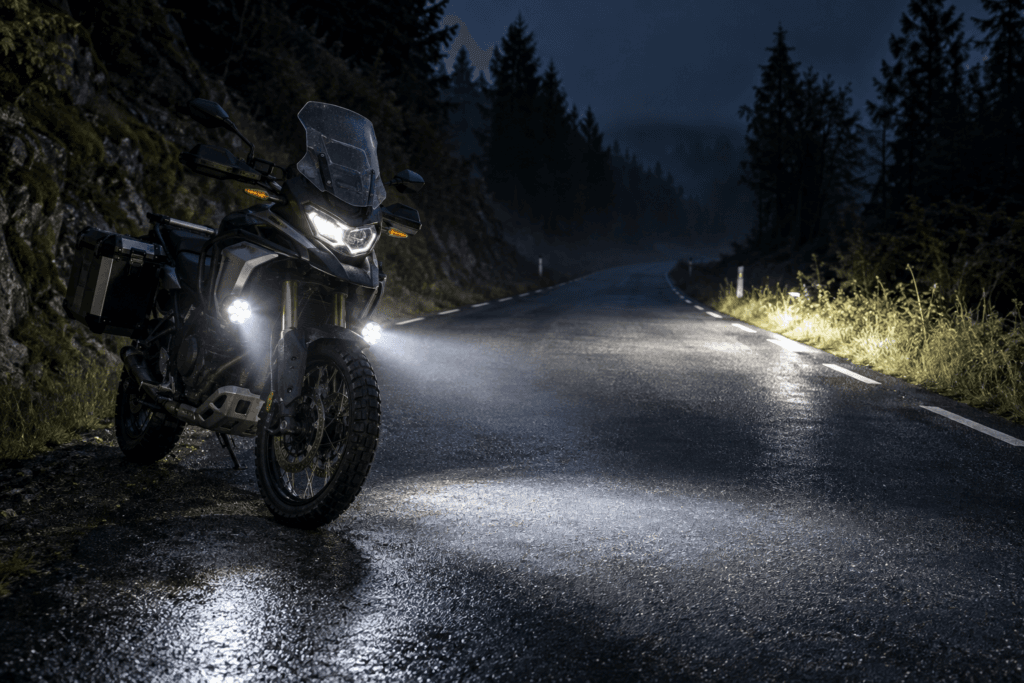
Choosing motorcycle auxiliary lights sounds simple until you begin comparing beam patterns, wattage claims, wiring kits, waterproof ratings and mounting options. Recent discussions in Reddit communities such as r/AdventureBike and r/motorcycles show that riders are asking a more practical question: which lights will remain useful and reliable after months of real-world riding?
One of the most active recent discussions came from a Himalayan 450 owner who felt overwhelmed by the number of brands and styles available. Other riders compared premium systems with inexpensive lights and repeatedly returned to the same priorities: useful beam control, weather sealing, solid wiring, low power consumption and long-term reliability. A separate discussion about replacing old, unstable adventure-bike spotlights focused heavily on mounting strength and electrical compatibility.
These conversations are anecdotal rather than laboratory tests, but they reveal what riders actually notice after installation. Below are the seven factors that matter most when selecting motorcycle auxiliary lights in 2026.
1. A Useful Beam Matters More Than an Impressive Wattage Number
High wattage can look attractive on a product page, but riders experience the beam—not the number printed on the box. A good auxiliary light should place illumination where it is needed without creating excessive glare for approaching traffic.
For long-distance riding, a spot beam can extend visibility farther down the road. A wider flood or fog-style beam improves near-field and roadside coverage. Many adventure riders prefer a controlled combination: enough distance to identify hazards early, with sufficient width to see road edges, animals and obstacles.
Before buying, ask the supplier for beam photos, operating modes and mounting recommendations. Product testing should include both brightness and beam shape. An uncontrolled bright light can reduce comfort for other road users and may not be legal in every market.
2. Waterproofing Must Include the Entire System
Reddit riders frequently distinguish between a lamp that is bright on day one and a system that survives rain, vibration, dust and repeated washing. An IP-rated housing is important, but the weakest point is often outside the lamp body.
Buyers should evaluate:
- Housing and lens sealing
- Waterproof connectors
- Cable entry protection
- Switch construction
- Relay and fuse-holder protection
- Corrosion resistance of brackets and fasteners
For distributors, a complete weather-resistant wiring kit can reduce returns more effectively than simply increasing advertised lamp power. MOTORCM offers motorcycle auxiliary lights for OEM and wholesale supply, with customization options for lamps, brackets, wiring and packaging.
3. Mounting Stability Is a Reliability Feature
One recent r/AdventureBike thread began because the rider’s existing auxiliary lights had become old and unstable. That problem is familiar to anyone who rides rough roads: vibration can loosen bolts, fatigue thin brackets and change the beam aim.
A dependable mounting system should use a rigid bracket, secure fasteners and an adjustment method that remains locked after setup. The lamp should not interfere with steering, suspension movement or crash bars. Wiring also needs enough slack for full steering movement without rubbing against sharp edges or hot components.
When evaluating samples, wholesalers should test the lamp and bracket together. A durable light paired with a weak bracket still creates a poor customer experience.
4. Wiring Quality Can Decide Whether a Light Lasts
Several Reddit discussions about auxiliary-light installations quickly turn into conversations about relays, fuses and switched power. That is not surprising: a reliable electrical installation protects the motorcycle’s original wiring and prevents the lights from draining the battery when the engine is off.
A common conventional layout is battery positive → correctly sized fuse → relay → auxiliary lights, with the relay triggered by an ignition-switched source or another suitable circuit. The exact arrangement depends on the motorcycle and local requirements. Modern motorcycles may use electronically monitored or CAN bus systems, so owners should consult the motorcycle manufacturer or a qualified technician before modifying the electrical system.
Do not assume that every motorcycle accepts the same harness. For wholesale programs, offering model-specific connectors or clearly documented universal kits can substantially reduce installation questions.
5. Low Power Consumption Is Especially Important on Smaller Bikes
One theme in recent rider discussions is that small LED lights can provide useful illumination while placing a modest load on the charging system. This matters for scooters, commuter motorcycles and smaller-displacement adventure bikes, particularly when riders also use USB chargers, heated grips or navigation equipment.
Buyers should request realistic current-draw data and confirm the operating-voltage range. Total accessory demand must remain within the motorcycle charging system’s available capacity. Oversized wattage claims without verified electrical data are not useful to distributors or end customers.
6. Premium Features Must Solve a Real Riding Problem
Reddit recommendations range from inexpensive generic lights to premium systems costing many times more. Riders often accept a higher price when it brings measurable benefits such as better sealing, controlled optics, dependable electronics, adjustable output or proven durability.
For wholesalers, the strongest product range usually includes more than one position:
- An entry-level model for commuters and price-sensitive markets
- A mid-range waterproof model for touring and daily use
- A higher-output model for adventure and off-road applications
This tiered approach helps distributors serve different customers without forcing every buyer into the same specification.
7. Daytime Visibility Should Not Become Daytime Glare
Some riders use auxiliary lights not only to see at night but also to become more noticeable during the day. A U.S. National Highway Traffic Safety Administration study examined several forward-lighting configurations and suggested that lighting beyond a standard low beam may improve aspects of motorcycle conspicuity, although the results were mixed and the researchers advised caution.
The practical lesson is not “the brighter, the safer.” Correct positioning, aim, operating mode and compliance with local regulations matter. Riders should never use auxiliary lamps in a way that dazzles other road users.
A Practical Buyer Checklist
Before placing a wholesale or private-label order, ask these questions:
- What beam pattern does the light produce?
- What are the verified voltage and current requirements?
- Are the housing, connectors and switch weather resistant?
- Does the kit include a fuse, relay and clear wiring instructions?
- Can the bracket withstand vibration and repeated adjustment?
- Is the system compatible with the target motorcycle models?
- Can the supplier customize the logo, packaging, harness or bracket?
- What are the sample lead time, MOQ and warranty terms?
What Reddit’s Riders Are Really Asking For
The most useful insight from these conversations is simple: riders do not want the highest claimed number. They want lights that produce a controlled beam, survive bad weather, stay firmly aimed and connect safely to the motorcycle.
For importers and motorcycle-accessory brands, those same priorities should guide supplier selection and sample testing. A carefully specified light with dependable brackets and wiring can build repeat business; a brighter but poorly integrated product can create support problems and returns.
Looking for an auxiliary-light range for your market? Explore MOTORCM’s motorcycle LED auxiliary lights or request wholesale pricing, MOQ and OEM options. Our team supports private labels, distributors and motorcycle brands with product customization, packaging and bulk supply.
Sources and Further Reading
- Reddit: Best auxiliary lights? (r/AdventureBike)
- Reddit: Spot light/fog light recommendations? (r/AdventureBike)
- Reddit: Aux lights and switching discussion (r/AdventureBike)
- NHTSA: Motorcycle Conspicuity and the Effect of Auxiliary Forward Lighting
Safety note: Lighting and electrical requirements vary by motorcycle and jurisdiction. Follow the motorcycle and accessory manufacturers’ instructions, check local regulations and use a qualified technician when necessary.