
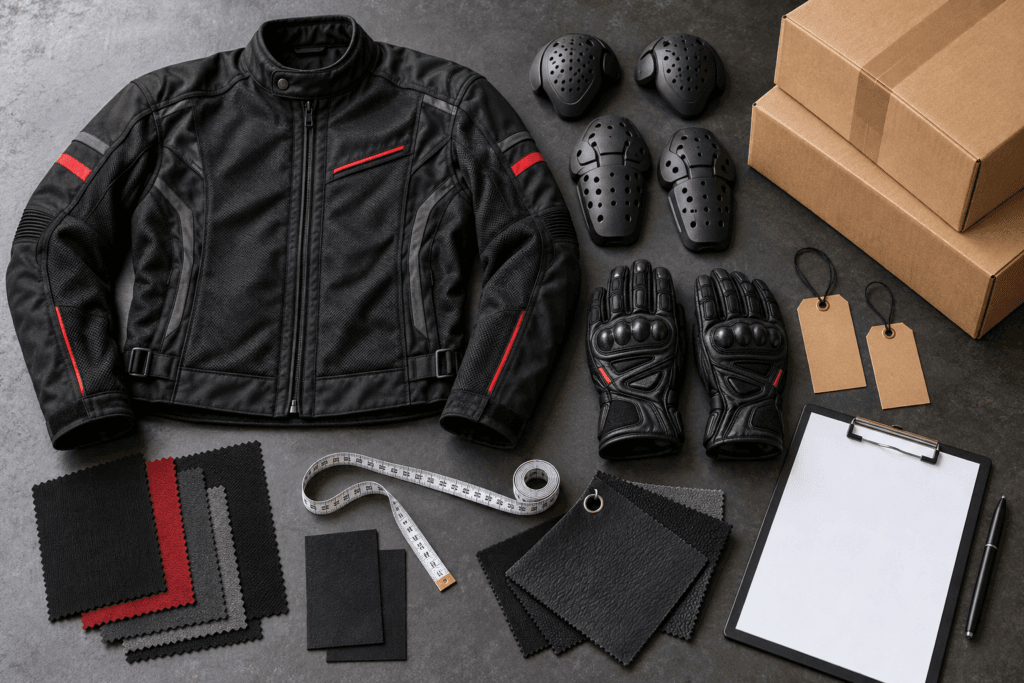
A recent discussion in r/motorcyclegear asked riders which parts of their kit are “safety critical” and what makes them trust a product. The replies did not agree on a single brand or price point. Instead, riders repeatedly weighed protective evidence, construction, fit and comfort. Another new-rider gear discussion shows how difficult it can be to assemble a practical kit within a budget.
Reddit comments are personal experiences, not crash-test data. But they give wholesalers and private-label brands a useful product-development question: what can a buyer verify before placing a bulk order, and what will a rider actually wear every day?
1. Separate protection claims from product evidence
Some riders prioritize standardized ratings; others emphasize materials, stitching and real-world fit. Both concerns matter. A logo, a premium price or a vague “CE” badge cannot replace product-specific documentation. For each glove or jacket model, ask the supplier which exact standard and version applies, which size and variant was tested, and whether the report corresponds to the current production design. Do not assume one certified component makes the entire garment certified.
Requirements vary by product category and destination market, so importers should verify the applicable standard, local labeling and compliance before making safety claims.
2. Inspect the areas riders rely on most
Hands and joints came up frequently in the Reddit discussion. When evaluating gloves, inspect palm material, reinforcement placement, seam strength, closure security and whether the glove stays in place during normal hand movements. For jackets, review the abrasion-resistant shell, seam construction, armor pockets and whether protectors remain correctly positioned when the rider bends or reaches for the bars. A feature list is only the beginning; request a sample and inspect the assembled product.
Define acceptance criteria in your purchase order. Examples include consistent stitching, no exposed sharp hardware, secure closures, correctly positioned protectors and documented inspection of each production batch. If a protective claim is important to your brand, specify the supporting test evidence before approving packaging artwork.
3. Treat fit and comfort as adoption requirements
One recurring point in the discussion was that uncomfortable gear may stay in a closet. This is especially relevant for hot-weather commuters and delivery riders. A glove that is too bulky can make controls awkward; a jacket that feels too restrictive may be left at home. Comfort does not substitute for protection, but it determines whether customers are willing to use the product.
During sample trials, check several sizes on real riders in the target market. Test handlebar reach, finger movement, cuff overlap and ventilation while keeping protective components in position. Our wholesale gear sizing guide can help you plan size ranges and reduce avoidable returns.
4. Build a product range around use cases, not just price tiers
A city commuter, a touring rider and a tropical-market delivery rider do not use identical kit. Before choosing a private-label range, decide who the product is for, which riding conditions it must handle and which compromises are unacceptable. A breathable daily glove and a weather-oriented touring glove may need different materials, patterns and test priorities.
For Southeast Asian distribution, include warm-weather wearability, sudden rain, repeat daily use and local size preferences in the brief. Choose a small number of coherent models first; then compare sample feedback and reorder data before expanding the catalog. Our motorcycle gloves and riding apparel categories provide starting points for an OEM discussion.
5. Send a quote request that a supplier can actually answer
A specific sourcing brief gets a more useful response than “send your best price.” Include:
- Product type and intended rider or use case
- Destination country and any required standard or documentation
- Target sizes, materials, protection features and colorways
- Logo, label and packaging requirements
- Estimated quantity per model and size, plus sample quantity
- Target delivery window and expected reorder plan
MOTORCM supports motorcycle gear wholesale and OEM/ODM customization. Tell us your product category, destination market and estimated quantity, and we can discuss suitable samples, specifications, MOQ and pricing. Request an OEM motorcycle gear quote.
The takeaway
Riders may disagree about brand loyalty or budget, but the underlying request is consistent: gear should have credible protective claims, dependable construction and a fit that works in real riding conditions. For distributors, the best way to turn that demand into a private-label line is to test the sample, verify its documentation and write the requirements down before committing to bulk production.
Source note: The Reddit threads above reflect individual opinions and are cited as market feedback, not as proof that any product prevents injury. Riders should choose appropriately certified equipment, follow local requirements and inspect fit before use.