
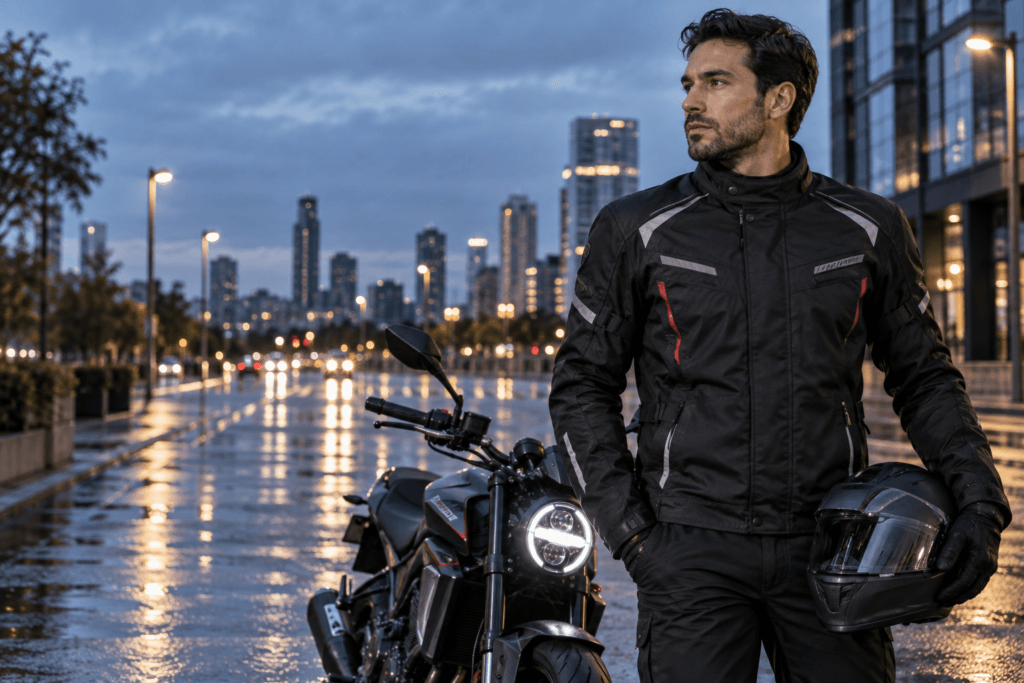
Short answer: a commuter motorcycle jacket should combine verifiable protection, correct fit, real airflow, weather flexibility and conspicuity without becoming too bulky or expensive for daily use. For distributors and private-label brands, the winning product is not simply the jacket with the longest feature list—it is the jacket riders will actually wear on every commute.
This conclusion reflects recurring concerns in recent rider discussions, including a September 2026 r/motorcyclegear discussion about reflective, multi-season commuter jackets and another thread in which new riders emphasized that fit can vary significantly between brands. Reddit comments are individual opinions, not laboratory evidence, but they reveal the questions buyers ask before spending money.
Key takeaways for motorcycle jacket buyers
- Protection: verify the standard, test report and exact model—not just a generic “CE” claim.
- Fit: test real samples across the intended size range and riding posture.
- Climate: specify airflow, liner strategy and rain protection for the target market.
- Visibility: use reflective material where it remains visible in a normal riding position.
- Daily usability: keep closures, pockets, cuffs and adjustments easy to operate.
- Wholesale readiness: define size ratios, MOQ, branding, packaging and inspection criteria before production.
What is a commuter motorcycle jacket?
A commuter motorcycle jacket is protective riding apparel designed for frequent road use, short-to-medium trips and repeated on/off cycles. Compared with a track-focused leather jacket, it usually prioritizes ventilation, weather adaptability, practical pockets, visibility and comfort over a work shirt or base layer. Compared with casual outerwear, it should use motorcycle-specific construction and documented protective specifications appropriate to the destination market.
For tropical and Southeast Asian markets, a practical commuter jacket often uses abrasion-resistant textile or mesh zones, removable protectors, reflective panels, adjustable cuffs and enough airflow for slow urban traffic. A removable waterproof or thermal layer can extend the selling season, but only if the added bulk does not compromise fit.
The six specifications riders care about most
1. Verifiable protection—not vague safety language
Recent Reddit replies repeatedly put safety ratings and third-party testing ahead of price or brand prestige. For a wholesale buyer, “CE armor” is not a complete specification. Ask which standard applies to the garment and which applies to the protectors, what protection level is claimed, which laboratory issued the report, and whether the tested sample matches current production.
Keep test reports, model references, labels and packaging claims consistent. Requirements differ by product type and destination country, so importers should confirm the applicable regulations before sale. MOTORCM can discuss documentation requirements during sample development, but the buyer remains responsible for verifying market-specific compliance.
2. Correct fit in the riding position
Fit is not only about chest circumference. A jacket may feel comfortable while standing but pull across the shoulders, expose the lower back or move protectors away from the joints once the rider reaches the handlebars. Sample evaluation should therefore include a seated riding posture.
Check chest, shoulder, sleeve and back length; confirm that elbow and shoulder protectors stay centered; and test the jacket over the clothing customers normally wear. Letter sizes are not universal. Use physical measurements in centimeters and compare them with your local customer data. See our motorcycle gear sizing guide for wholesale buyers for a practical size-planning framework.
3. Ventilation riders can actually feel
Commuters spend time in slow traffic, where airflow is lower than at touring speed. Small decorative vents may look good in a catalog but provide little relief. Mesh panel area, vent placement, liner breathability and airflow paths matter more than the number of zippers.
For hot and humid markets, test the jacket at low speed as well as normal road speed. Ask whether mesh zones weaken high-risk areas and how the construction balances ventilation with abrasion resistance. A good tropical jacket should make the trade-off explicit rather than hiding it behind the word “breathable.”
4. Multi-season design without excessive complexity
The rider who started the recent Reddit discussion wanted one reflective jacket for most of the year. That demand is commercially important: many customers prefer one adaptable product instead of separate jackets for every season.
A removable waterproof liner, detachable thermal layer, adjustable vents and sleeve-volume controls can widen the use range. However, each extra component adds cost, bulk and possible failure points. Choose features based on the target climate. In warm, rainy regions, strong ventilation plus a lightweight rain layer may be more useful than a thick insulated liner.
5. Reflective visibility designed for a real rider
Reflective piping or panels should be visible from useful angles when the rider is seated, carrying a backpack and wearing gloves. Evaluate front, side and rear visibility under vehicle headlights. Do not treat reflective material as a substitute for active lighting or safe riding practices; it is one part of a broader visibility strategy.
For private labels, reflective placement can also become a recognizable design feature. Confirm wash durability, adhesion or stitching quality, color consistency and how the material performs after repeated flexing.
6. Everyday convenience and durability
Daily riders notice details that catalog pages often overlook: whether the main zipper catches, whether cuffs fit over or under gloves, whether pocket contents stay dry, whether collar edges irritate the neck and whether adjustments remain secure after months of use.
During sample approval, operate every closure with gloves on. Inspect stress points, pocket corners, zipper ends, hook-and-loop areas and protector-pocket openings. Repeat the test after washing or conditioning according to the care instructions.
Recommended sourcing specification
| Area | Questions to define before ordering |
|---|---|
| Target rider | Daily commuter, delivery rider, touring rider or mixed use? |
| Climate | Hot/humid, rainy, cool or true multi-season? |
| Protection | Which garment and protector standards are required in the destination market? |
| Construction | Textile type, mesh zones, seam method and reinforcement locations? |
| Fit | Measurement chart, riding-position test and local size ratio? |
| Visibility | Reflective placement, area and durability requirements? |
| Weather | Fixed membrane, removable liner or separate rain layer? |
| Branding | Logo method, labels, hangtags, packaging and colorways? |
| Order | Sample quantity, MOQ per color/size, lead time and reorder plan? |
Sample approval checklist for distributors
- Compare the sample with the technical specification and test documentation.
- Fit-test multiple sizes on riders from the target market.
- Check protector position while seated on a motorcycle.
- Test airflow at urban and normal riding speeds.
- Inspect visibility from the front, sides and rear at night.
- Operate zippers, cuffs and pockets while wearing gloves.
- Check stitching, reinforcements and closures after repeated use.
- Confirm labels, care instructions, packaging claims and model codes.
- Approve a sealed reference sample before bulk production.
- Define production inspection criteria and acceptable tolerances in writing.
Frequently asked questions
What should a commuter motorcycle jacket prioritize?
It should prioritize documented protection, correct riding-position fit, usable ventilation, weather adaptability, reflective visibility and easy daily operation. The order of importance changes with climate and rider type, so define the use case before selecting features.
Is a more expensive jacket always safer?
No. Price may reflect materials, comfort features, branding or distribution costs. Buyers should compare applicable ratings, construction, fit and model-specific documentation rather than assuming price alone proves protection.
Is mesh suitable for hot-weather commuting?
Mesh can improve airflow, but the type, placement and overall garment construction matter. Buyers should evaluate the complete jacket specification and required market standards, especially in high-risk impact and abrasion zones.
How should wholesalers choose motorcycle jacket sizes?
Use physical body and garment measurements, not letter sizes alone. Test a full or representative size set with local riders, record fit feedback in a riding posture and build the order ratio from target-market data.
Can MOTORCM customize commuter motorcycle jackets?
Yes. MOTORCM is a motorcycle riding gear manufacturer and trading company in Foshan, China, supporting OEM/ODM development, private labels, custom packaging and wholesale supply. Available options depend on the selected jacket, materials, quantity and documentation requirements.
Build the product brief around the rider
The strongest lesson from current rider conversations is simple: commuters do not want features for their own sake. They want protection they can verify, a fit they can live with and climate performance that makes the jacket practical every day.
Explore MOTORCM’s motorcycle riding apparel range and OEM/ODM capabilities. For a relevant quotation, send the destination country, jacket style, required features, size range, branding needs and estimated quantity through our wholesale inquiry form.
Editorial note: Reddit discussions are cited as qualitative market feedback. They do not constitute product testing, medical advice or proof that a product prevents injury.