
IP67 and IP68 differ in immersion testing: IP67 means protection against temporary immersion up to 1 meter for 30 minutes (per IEC 60529), while IP68 means continuous immersion beyond 1 meter, with exact depth and duration specified by the manufacturer. For motorcycle auxiliary lights in tropical monsoon markets, choose IP68 — high-speed wind, road spray and rapid temperature changes exert more pressure than the static IP67 test, so IP68 reduces out-of-box failures and warranty claims. Both ratings are dust-tight (first digit 6); the decision is about water tolerance.
How to Read IP Ratings: The IEC 60529 Standard
The IP (Ingress Protection) rating is an international standard defined by the International Electrotechnical Commission (IEC) under IEC 60529. It consists of two digits that represent the level of protection against solids and liquids.
- The First Digit (Solid Protection): Ranging from 0 to 6, this indicates protection against dust and debris. A rating of “6” means the device is “dust-tight,” offering complete protection against contact with dust.
- The Second Digit (Liquid Protection): Ranging from 0 to 9, this indicates the level of protection against water ingress.
For motorcycle auxiliary lights, the first digit is almost always 6. The real debate for distributors lies in the second digit: 7 versus 8.
IP67 vs IP68 Difference: The Technical Comparison
When comparing IP67 and IP68, it is crucial to look at the testing protocols defined per IEC 60529. These are not just numbers; they represent specific environmental stressors.
IP67: Temporary Immersion
Under the IEC 60529 standard, an IP67 rating ensures the light is protected against the effects of immersion in water between 15 cm and 1 meter for a duration of 30 minutes. While this is sufficient for a quick ride through a puddle or light rain, it does not guarantee protection against prolonged exposure or high-pressure water ingress during a heavy tropical storm.
IP68: Continuous Immersion
The IP68 rating is a step up in durability. Unlike IP67, which has a fixed 30-minute limit, IP68 protection is defined by the manufacturer and is intended for continuous immersion in water under conditions which shall be more severe than IP67. Typically, this means the unit can withstand being submerged deeper than 1 meter for longer periods without any harmful effects.
For a distributor, IP68 motorcycle light wholesale sourcing ensures that the internal electronics and high-intensity LEDs remain dry even if the rider faces a prolonged deluge or accidental deep-water wading.
Comparison Table: IP67 vs. IP68 Specifications
| Feature | IP67 Rating | IP68 Rating |
|---|---|---|
| Solid Protection | Dust-tight (Level 6) | Dust-tight (Level 6) |
| Water Testing Depth | Up to 1 meter | Over 1 meter (Manufacturer specified) |
| Testing Duration | 30 Minutes | Continuous Immersion |
| IEC 60529 Status | Temporary Immersion | Continuous Immersion |
| Best Market Fit | Moderate climates, light rain | Tropical, Monsoon, Off-road |
| Cost Implication | Standard manufacturing | Enhanced sealing, higher QC |
Why Tropical and Monsoon Markets Should Prioritize IP68
In markets like Thailand, Indonesia, Vietnam, and the Philippines, the rainy season brings more than just moisture; it brings humidity and rapid temperature fluctuations that can cause internal condensation.
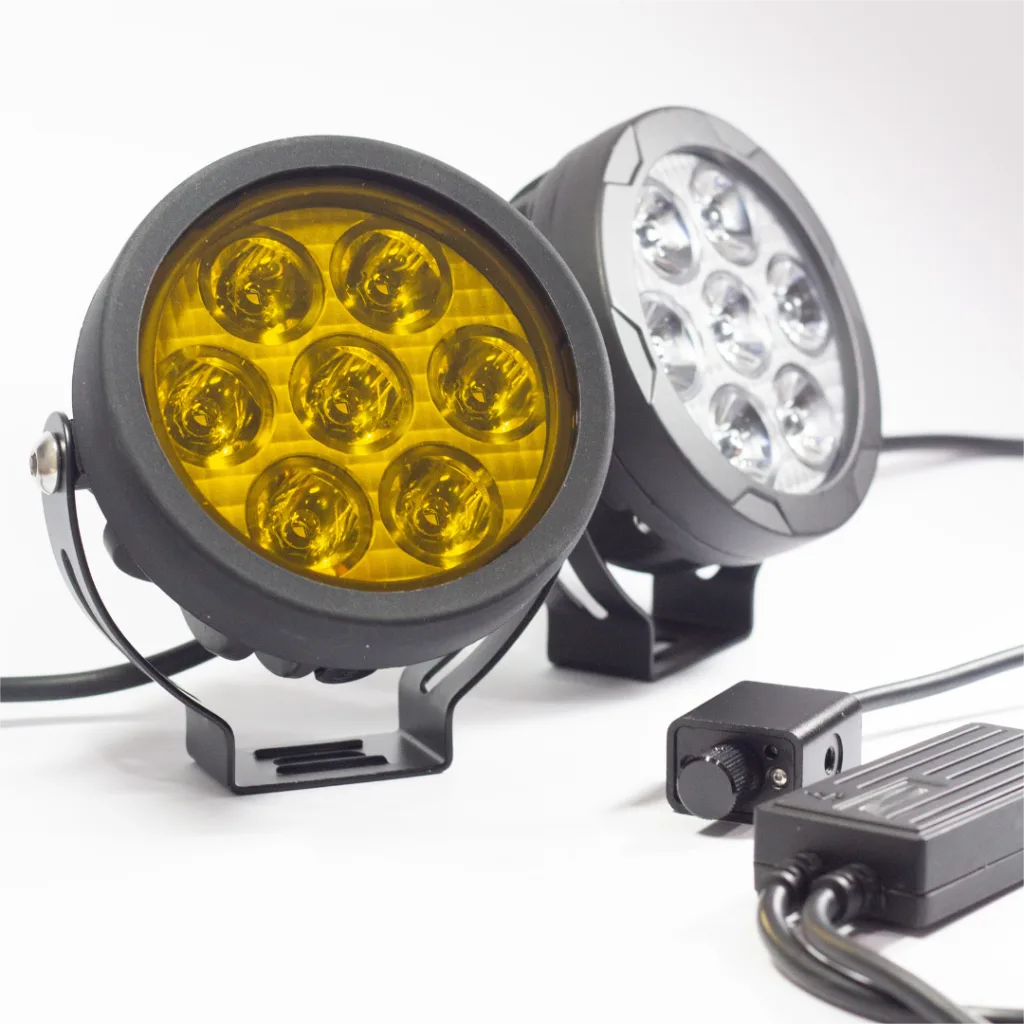
If a light is only rated IP67, the pressure differential caused by rapid cooling (e.g., a hot light hitting cold rainwater) can sometimes suck moisture through seals that were only tested for 30 minutes. An IP68-rated light, like the 120W IP68 auxiliary light from MOTORCM, utilizes superior sealing materials and precision-engineered aluminum shells to maintain integrity under these extreme pressure changes.
For B2B buyers, choosing IP68 reduces the “out-of-box” failure rate and long-term warranty claims, which are the primary overhead costs in international motorcycle light distribution.
Beyond Waterproofing: Key Parameters for High-Performance Lights
While waterproofing is the baseline, a durable motorcycle light requires a holistic approach to engineering. At the MOTORCM factory in Foshan, we focus on several key pillars:
- Heat Dissipation: Our lights use high-grade aluminum shells. Aluminum provides the thermal conductivity necessary to keep 120W LEDs cool, preventing the premature dimming or burnout common in plastic-housed alternatives.
- Voltage Compatibility: The DC 12V-80V wide voltage range is critical for B2B distributors. It ensures the light is compatible with a standard 12V motorcycle battery as well as electric bikes and heavy-duty vehicles, simplifying your inventory management.
- High-Intensity Output: A 120W rating ensures high visibility in low-visibility monsoon conditions, providing the safety riders demand.
- Lifespan and Reliability: By combining IP68 sealing with thermal management, the service life of the lamp beads is significantly extended, reducing the frequency of replacement parts.
5 Questions for Wholesale Sourcing: A Buyer’s Checklist
Before finalizing a deal with a motorcycle light factory, ask these five questions to verify the quality of your waterproof LED auxiliary light shipment:
- Do you have an official IEC 60529 test report? Real IP68 ratings must be backed by laboratory testing, not just marketing claims.
- What material is used for the casing? Ensure it is die-cast aluminum for both IP integrity and heat dissipation.
- What is the voltage range? Ask if it supports the 12V-80V range to cover multiple vehicle segments.
- What are the OEM and Customization options? For orders meeting the MOQ of 50 pieces, can you add your own branding or modify the wiring harness?
- What is the warranty policy for water ingress? A factory confident in its IP68 rating will offer clear terms for water-related failures.
FAQ
1. Is IP68 always better than IP67 for motorcycles?
Technically, yes. While IP67 is enough for casual riding, motorcycles are exposed to high-speed wind, rain, and road spray, which exert more pressure than a static 1-meter tank test. IP68 provides a necessary safety margin for highway speeds and heavy storms.
2. Can IP68 lights be washed with a high-pressure cleaner?
Caution is advised. IP68 covers immersion, but high-pressure jets are covered by the IP69K rating. Even with an IP68 light, it is best to avoid direct, close-range pressure washing of the seals.
3. Why is the MOTORCM 120W light popular in B2B markets?
The combination of an IP68 rating, a robust aluminum shell, and a versatile 12V-80V operating voltage makes it a “safe bet” for wholesalers who need a product that fits various bikes and resists harsh weather.
4. What is the MOQ for wholesale orders?
At MOTORCM, we support growing distributors with a low MOQ of 50 pieces, allowing you to test the IP68 quality in your local market before scaling to larger volumes.
Get a Quote for Your Market
Looking to upgrade your inventory with reliable, high-output lighting? MOTORCM specializes in manufacturing IP68-certified, aluminum-housed motorcycle lights designed for the toughest environments.
Get a Quote Today to discuss bulk pricing, OEM branding, and shipping solutions for your region.